


 226 / 302

D
riving
C
apacity
The Rembrandt Bugatti has an eight-litre
W16 engine that produces an unparalleled
torque of 1,500 Nm from 1,200 PS at
3,000-5,000 rpm. It accelerates from 0-60
in a staggering 2.6 seconds and has
a maximum speed of 254 mph with
the roof down, making it the fastest
production roadster ever built. In tribute
to its namesake, Achim Anscheidt, head
designer at Bugatti said: “Rembrandt
Bugatti had a special talent for capturing
the movement of animals at their most
expressive moment. The patina, the soul
and the crafted character of his bronze
sculptures guided us to the colour and
material choices in the Legend car that
carries his name.” Using this influential
figure as the landmark of this model, the
Rembrandt Bugatti is described as “a super
sports car that fuses beauty and elegance
with great dynamics and sporting appeal.”
I
nterior
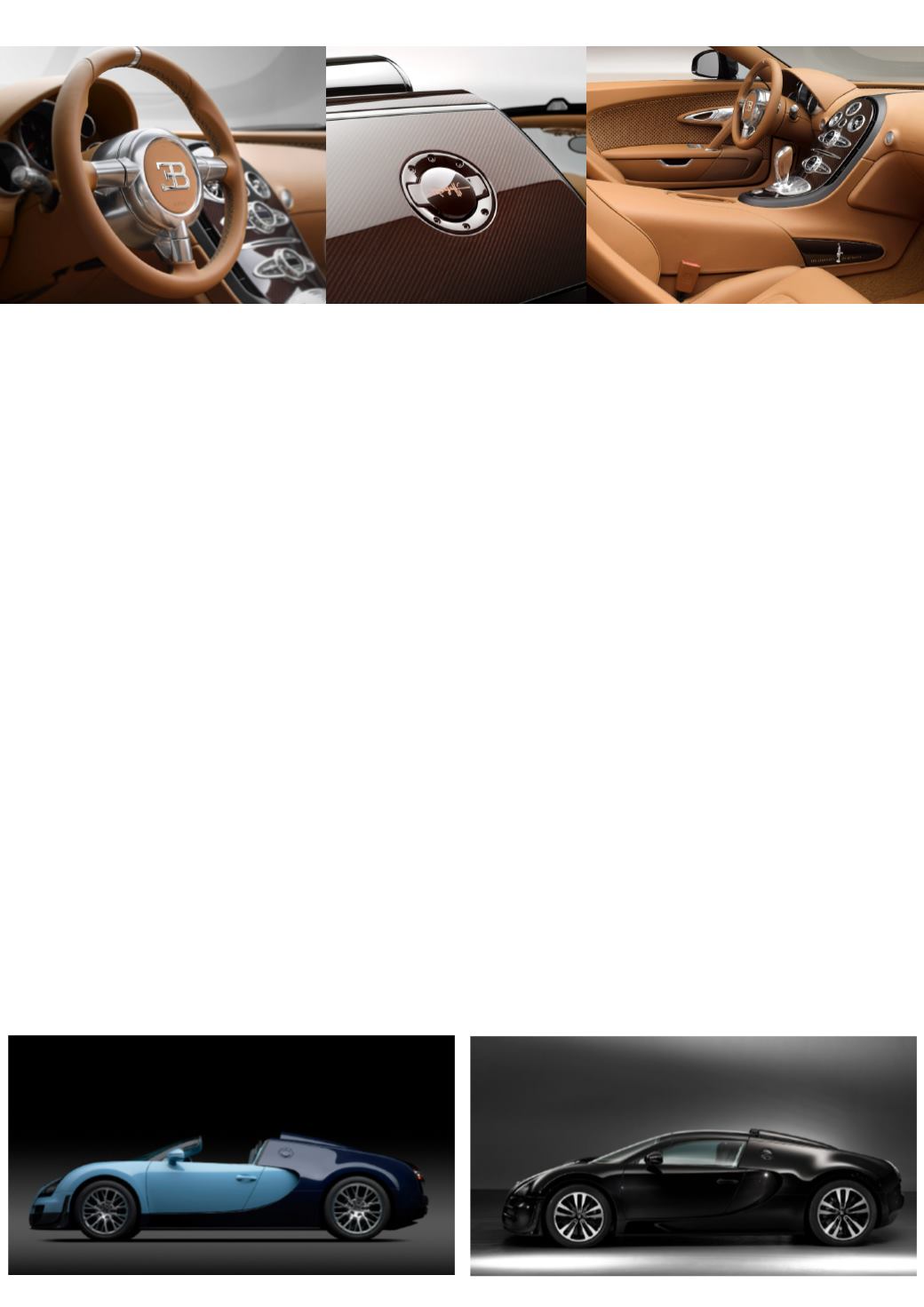
Inside this amazing model, the Vitesse
is completely upholstered with leather
in light brown ‘Cognac’. The rear centre
box between the seats bears Rembrandt
Bugatti’s famous elephant sculpture which
was cast in bronze with great technical
skill, while the cover is made of bronze-
coloured clear-coated carbon, the artist’s
favourite material.With braided leather in
softly contrasting colours of ‘Cognac’ and
‘Coffee’, the door trim of the Rembrandt
Bugatti is another impressive feature.
On the steering wheel, you’ll find the EB
logo made of platinum and the insert of
the bronze-coloured clear-coated carbon
on the extended centre console has the
lettering ‘Les Légendes de Bugatti’. The
signature elephant and door sill plates
display Rembrandt’s portrait and signature.
E
xterior
A complete picture of beauty, the body
of the Rembrandt Bugatti Legend Vitesse
was designed in the ‘horizontal split’ and
is composed mainly of bronze-coloured
clear-coated carbon. Its lower half is
painted in an elegant light brown called
‘Noix’ while the famous Bugatti horseshoe
gleams in platinum from the front grille,
which is also seen in the EB logo at the
rear of the vehicle.The wheels are painted
in dark ‘Firefinch’ and light ‘Noix’ browns
which are combined to complete the
elegant appearance of this magnificent
vehicle. Rembrandt’s signature can be
found lasered onto the petrol and oil cap.
T
he
O
ther
F
ive
L
egends
Last year proved a very successful year
for Bugatti, having sold more than 90 per
cent of the 450 planned Veyrons.This year,
they are equally confident that they will
be as successful. The first Legends model
takes its inspiration from racing driver
Jean-Pierre Wimille’s first win in the blue
Bugatti 57GTank he drove to victory at the
24 Heures du Mans in 1937. To celebrate
this edition, the Vitesse was designed in
blue clear-coated carbon fibre and a light
Wimille Bleu paintwork finish, which
continues into the supercar’s interior.
The second Legends model celebrates
Gianoberto Carlo Rembrandt Ettore
Bugatti, also known as Jean, the eldest son
of Ettore Bugatti and the most gifted of
his four children. The Jean Bugatti edition
takes its inspiration from the Bugatti 57SC
Atlantic, one of Jean’s most successfully
designed models and the most exclusive
and exceptional sport coupe ever built.
It also ranks among the most expensive
vintage cars in the world. The body is
constructed entirely from jet-black, clear-
coated carbon fibre with the Bugatti
horseshoe on the front grille and the EB
logo on the rear in platinum for the first
time. Its wheels feature black diamond-cut
rims and Jean Bugatti’s signature is lasered
onto the Artic Grey painted petrol and oil
cap. Inside, the Vitesse is fully fitted out in
leather and has the same beige and brown
tones that were present in the original
Type 57SC Atlantic.
Representing the most successful era in
Bugatti’s racing history; the Meo Costantini
Legend model embraces the light-weight
construction and technical aesthetics of
the 1920s, and reminiscent of the Bugatti
Type 35.The body is primarily constructed
in carbon fibre with some of the features
rendered in hand-polished aluminium and
coated in clear lacquer. Blue, once France’s
classic motor sport colour, inspired a new
paint colour ‘Bugatti Dark Blue Sport’ to
be specially developed. Meo’s signature
bite
cars
bite
cars