


 58 / 298

of album artwork from all time (name-
dropping of such records and their artwork
need not occur with an artist like Bowie,
surely). Again, the lists of his inspirations
for creative processes are myriad and
lengthy, ranging from avant-
garde mime and surrealism
to Japanese Kabuki, German
Expression
and
West
End musicals. There are
photographs from certain
recording sessions and
musical instruments on
show. One of the most
striking exhibits has to
be the collection of
handwritten song lyrics
and word collages, cut
up and mixed together
in the style of writer
William Burroughs, all of
which have never been on
public display before.
The exhibition would not
be complete without in-depth
examinations of Bowie’s myriad
of famous fictional characters,
created throughout his career.
Major Tom, Ziggy Stardust,
Aladdin Sane and The Thin
White Duke all make their
appearances through the
exhibits on display, such
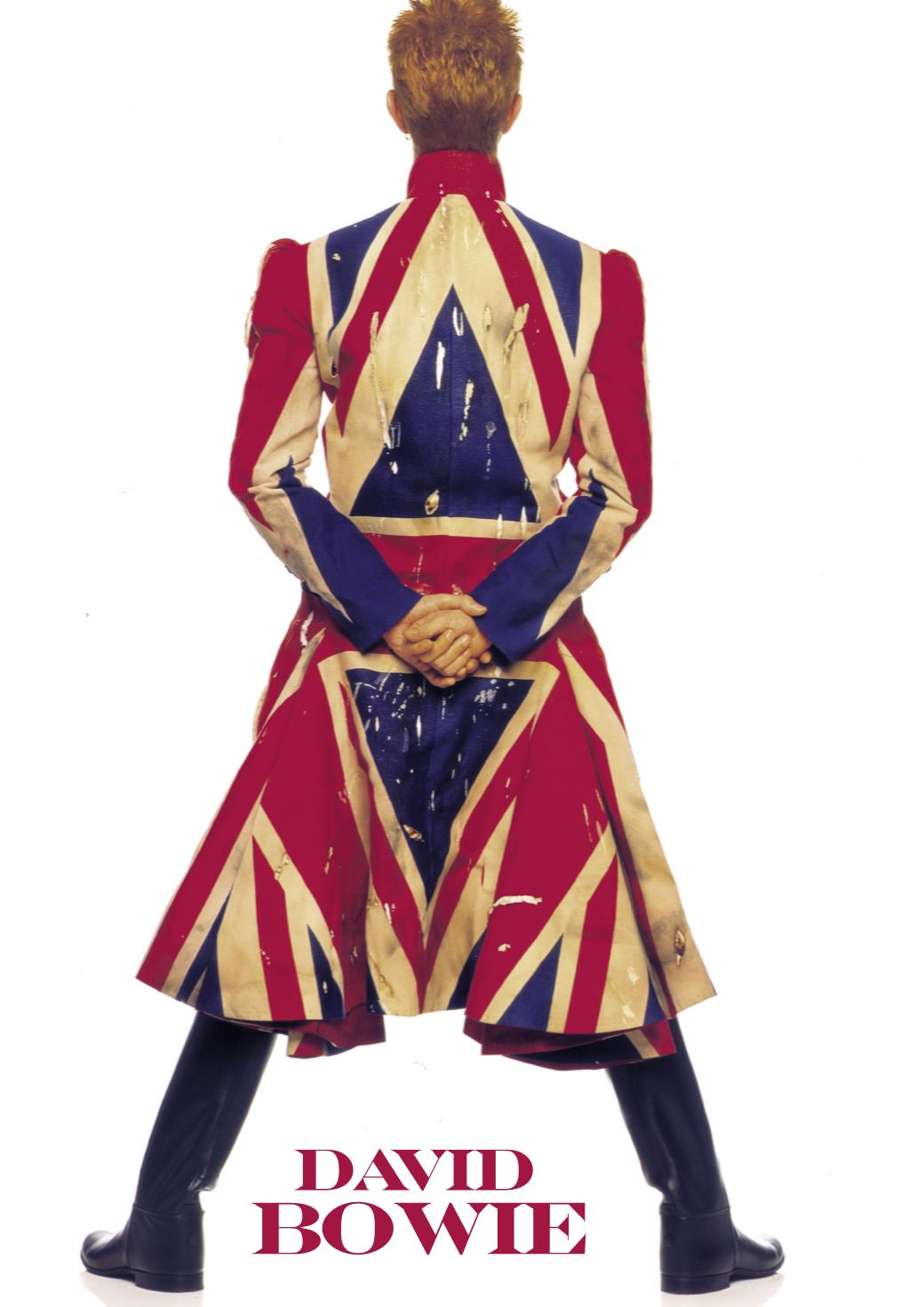
as outfits designed for
concert
tours
and
album covers and
the original multi-
coloured bodysuit
worn by Bowie
whilst
making
that
famous
performance
of the song
“Starman”
in 1972
on Top
Of The
Pops. All of
these characters
and their related
exhibits give a
glimpse into
the
great
i n f l u e n c e
they had
on
gay
liberation,
s o c i a l
mobility, and of course, pop culture.
It is in the final section that Bowie the
performer, both on stage and on screen,
is really explored. Some of Bowie’s
most ambitious and experimental of
music videos will be projected
throughout, including Bowie’s
1973 performance of“Jean Genie”
on
Top Of The Pops
, long thought
to have been lost but recently
rediscovered thanks to a copy
made by BBC cameraman John
Henshall, who had worked on
filming the original performance.
It was first re-broadcasted by the
BBC on 21st December 2011,
on the Christmas special of Top
Of The Pops 2, and can be seen
again in full at the exhibition.
Furthermore, extracts from
feature films in which Bowie
starred, including 1986’s
Labyrinth
and 1996’s
Basquiat
, will be shown
in separate screening rooms as part of
the exhibition’s fourth section.
Bowie’s 1974 Diamond Dogs tour is also
examined in great detail. Inspired by Fritz
Lang’s iconic silent sci-fi masterpiece
Metropolis
(1927) and the classically
harrowing novel
Nineteen Eighty-
Four
by George Orwell, the tour
was notable for its set design and
choreography, and will be brought
back to life through the use of
early storyboards and footage
of the tour, both of which have
been previously unseen by
the public. Bowie’s “Berlin
Trilogy” albums will also be
examined and discussed.
The exhibition ends
with a photography
collection, showcasing
p e r f o r m a n c e
photography by such
photographers as Herb
Ritts, John Rowlands, and
Helmut Newton.This has
been placed alongside
visual projections of all
things David Bowie,
demonstrating, as if
further proof were
needed, his influence
and power on
music, fashion, pop
culture, and the
arts.
bite
music
exhibition