


 51 / 298

A
fter it was shelved by Jive Records
for two years, Miguel released his
debut album,
All I Want Is You
in
November 2010. It initially performed
poorly and was under promoted by Jive,
amid the label’s dissolution. However, as
its singles attained radio airplay and Miguel
toured in its promotion, the album became
a sleeper hit and helped him garner an
audience and commercial standing. He also
garnered a following through his fervent
concert performances. After Jive was shut
down and absorbed by RCA Records,
Miguel acquired a new marketing team
to develop himself as more than a typical
urban artist, having felt pigeonholed into
being marketed as one by Jive. He said that
the experience of balancing creativity and
business sense on his first album made
him more confident in his approach with
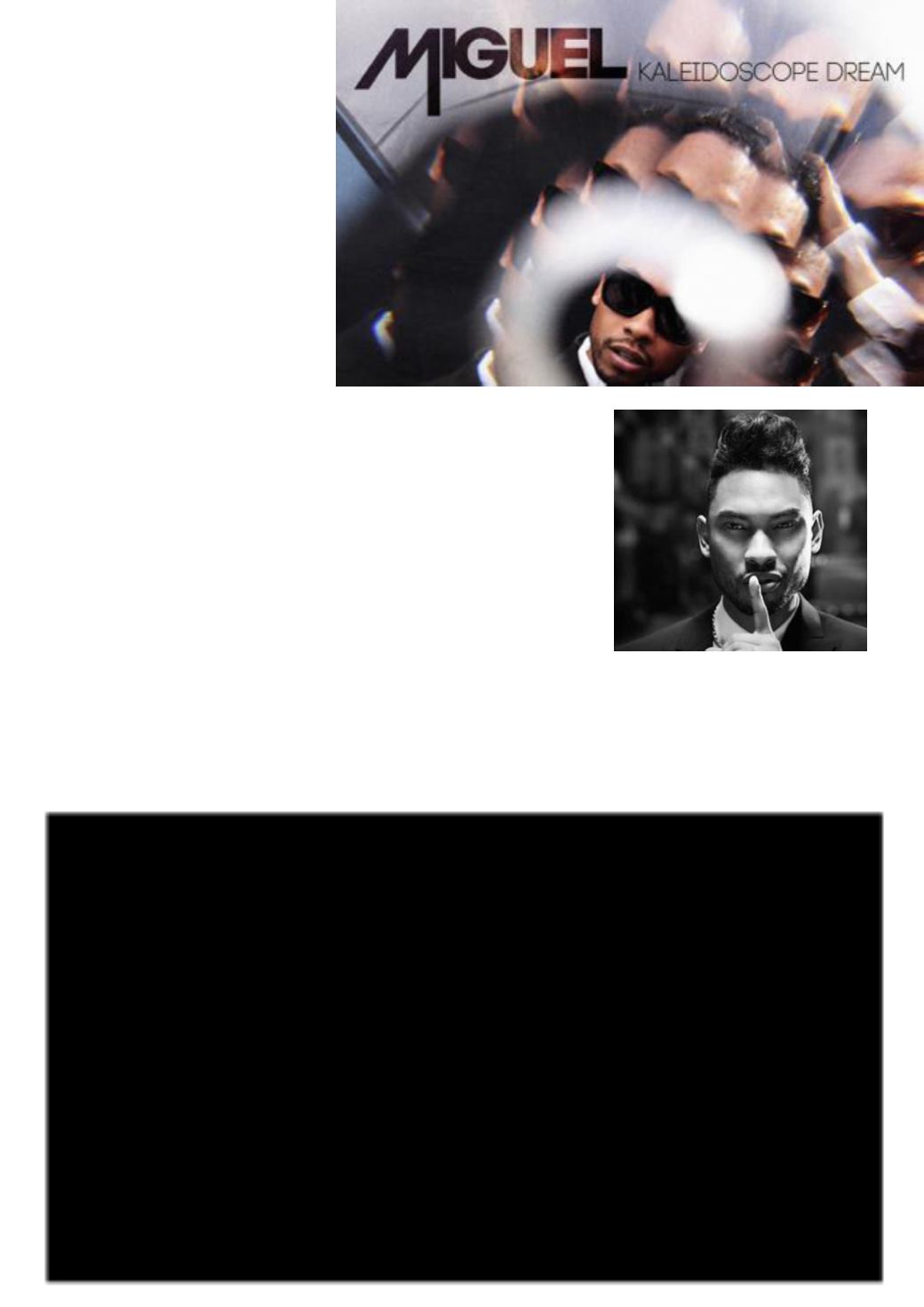
Kaleidoscope Dream.
Miguel sought to reinvent himself
artistically with the album. Inspired by
alternative musical influences, he wanted
to change the sound and expectations of
R&B songs on urban radio. He explained
the album’s title as “a metaphor for our
life; everyone has their own Kaleidoscope
Dream, it is the life that they project and it
is the life that they are solidifying with their
conscious decision and their subconscious
feelings.” Miguel also said that the album
represents the fantasies that are conveyed
through dreams, which he felt embodied
“the purest form of fantasy we unleash
through our subconscious... the truest
freedom we can experience; totally
unrepressed and totally creative.”
Kaleidoscope Dream
was released
September, 2012 by RCA Records. After
attaining commercial standing with his
2010 debut album
All I Want Is You,
Miguel
wanted to play a larger creative role in his
music and principally produced and wrote
Kaleidoscope Dream.
Miguel worked on the
album for approximately three months. He
recorded most of the album at Platinum
Sound Recording Studios in New York
City and MJP Studios in Los Angeles, and
worked with producers Warren “Oak”
Felder, Jerry “Wonda” Duplessis, and
Salaam Remi, among others.
An idiosyncratic album,
Kaleidoscope
Dream
features sparse production,
eccentric details, thick bass lines, buzzing
synthesisers, and hazy, reverbed sounds.
Its music incorporates R&B, pop, funk,
rock, and soul styles, as well as electronic
flourishes, psychedelic textures, and funk
rock guitar. Lyrically, the album generally
discusses sexual and romantic themes,
with existential subject matter on some
songs.Miguel titled
Kaleidoscope Dream
as a
metaphor for life and sought to represent
his own lifestyle and personality with its
music and lyrics.
www.officialmiguel.comMIGUEL
KALEIDOSCOPE
DREAM
